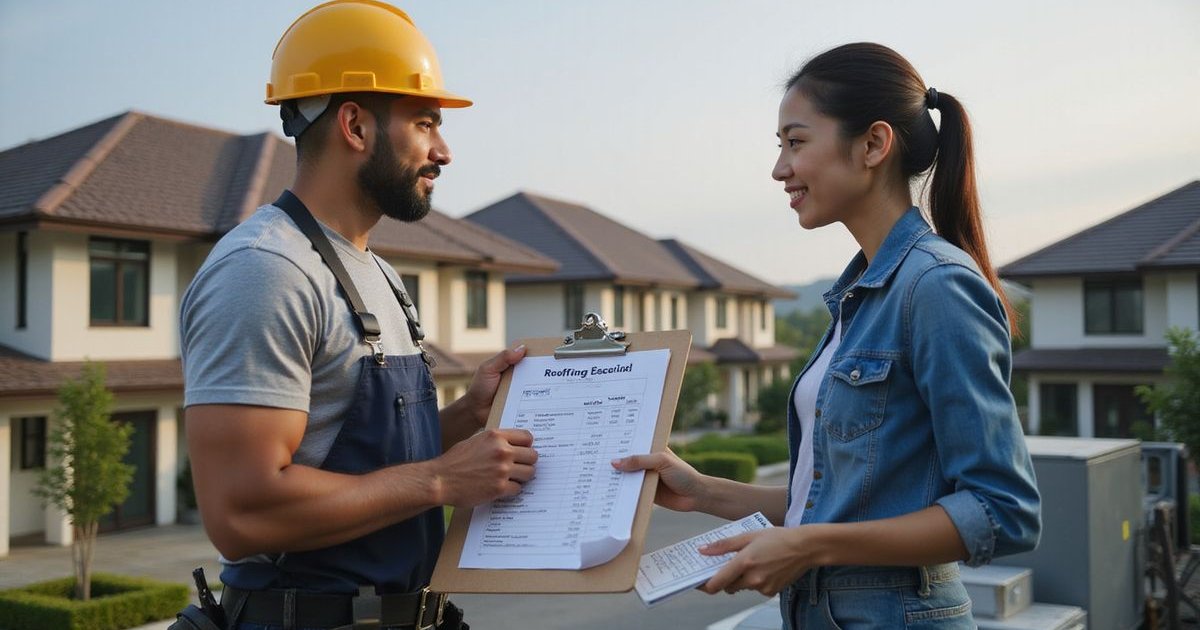
Complete Guide to Roof Waterproofing in Malaysia
Everything you need to know about roof waterproofing in Malaysia. Types, costs, process, and how to choose the right solution for your home.
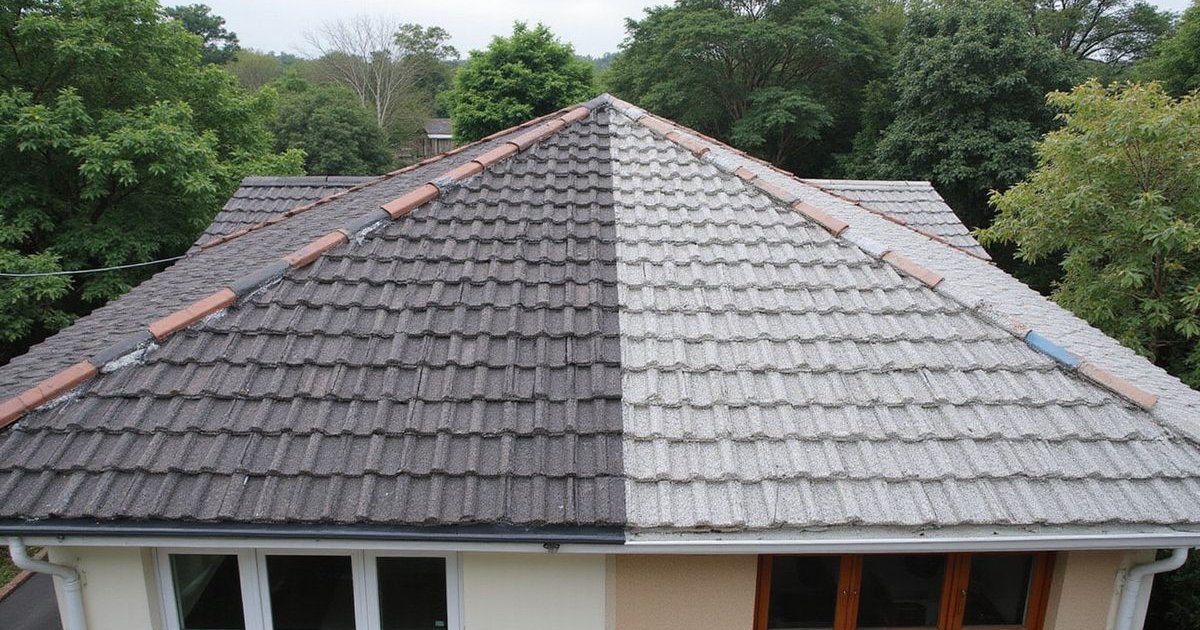
In Malaysia’s tropical climate, heavy monsoon rains and intense sun create a brutal cycle for any building material. We founded Roofing Man back in 2013, and if there is one thing 16 years of industry experience has taught us, it is that thermal shock—the constant expansion from heat and contraction from rain—is the real enemy of your roof.
Most homeowners only think about waterproofing when they see a stain on the ceiling. You know the signs. The paint bubbles, the smell of dampness sets in, or worse, water starts dripping during a heavy storm. Effective waterproofing prevents these structural nightmares before they start.
We have designed this guide to help you make sense of the options available in 2026. This analysis covers the specific materials that work in the Klang Valley, current pricing, and the exact process we use to keep homes dry.
When Do You Need Roof Waterproofing?
Waterproofing is not just for emergencies. In our experience, timing your maintenance can save you thousands of Ringgit in structural repairs.
You should consider professional roof waterproofing in these specific scenarios:
- Concrete Flat Roofs & Gutters: These are standard in Malaysian terrace houses and are notoriously prone to pooling water.
- Visible Efflorescence: If you see white, powdery deposits on your ceiling or walls, water is already moving through the concrete.
- Recurring Leaks: Spot roof leak repairs often fail because water simply travels to the next weakest point.
- New Extensions: A balcony or flat roof deck needs a pristine barrier before tiling.
- Age of Current Layer: Most developer-grade waterproofing fails after 10 to 15 years.
- Pre-Monsoon Preparation: We see a spike in calls during October and November; acting before the rainy season is safer.
Types of Waterproofing Systems
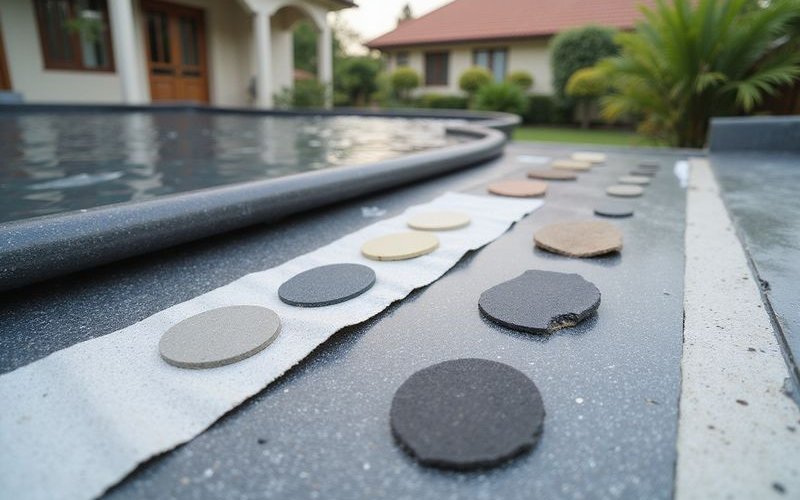
Choosing the right material is critical. We often see contractors using bathroom-grade waterproofing on exposed roofs, which inevitably fails under UV exposure.
1. Liquid Applied Membrane (UV Resistant)
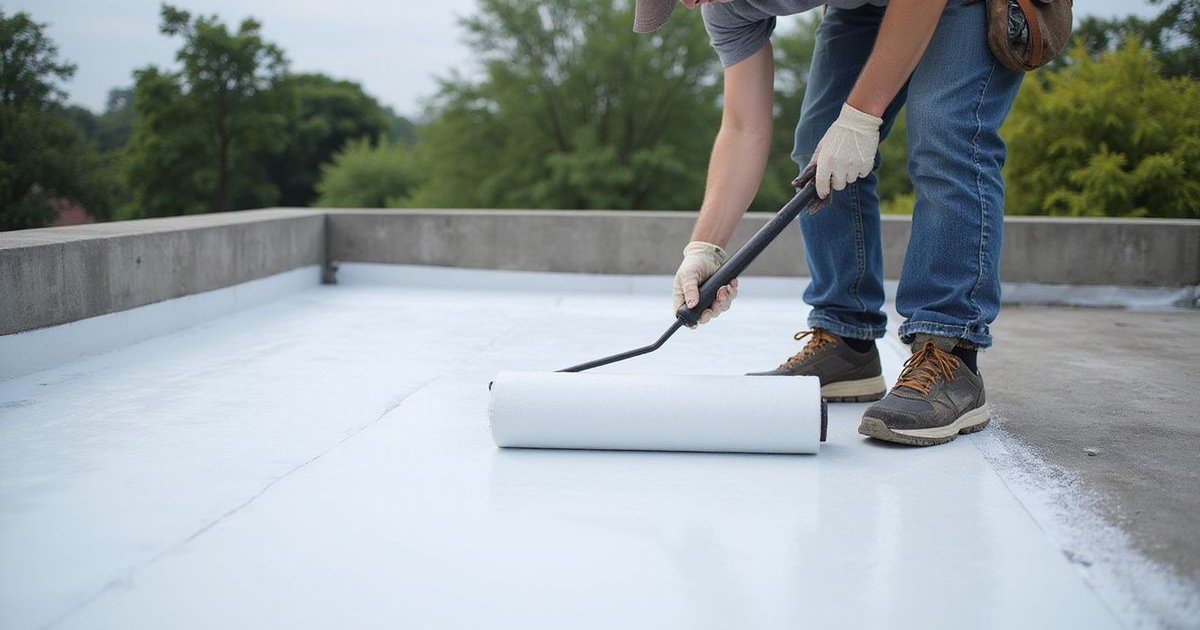
This is the most versatile solution for residential homes in Kuala Lumpur and Petaling Jaya. It involves applying a liquid coating (usually Acrylic or Polyurethane based) that cures into a rubber-like barrier.
Why it works: The fluid nature allows it to seal around complex shapes like vent pipes and air conditioning ledges seamlessly. Brands commonly used in Malaysia include Pentens and Sika, which are formulated for high humidity.
Key Features:
- Seamless application: Eliminates joints where leaks usually start.
- Elasticity: Stretches with the building’s thermal movement.
- Solar Reflectivity: White or light grey coatings can reduce indoor temperatures.
- Maintenance: Easy to patch if damaged.
Limitations: Getting the thickness right is difficult for amateurs. We apply at least three coats to ensure a consistent thickness of roughly 0.6mm to 1.0mm.
Best for: RC flat roofs, concrete gutters, and balcony remedial work. Lifespan: 5-10 years (extends with proper UV topcoats).
2. Torch-On (Modified Bitumen) Membrane
This is the heavy-duty standard for commercial buildings and condos. It consists of a 3mm or 4mm thick bitumen sheet reinforced with polyester, which we fuse to the roof using a gas torch.
Why it works: The “APP” (Atactic Polypropylene) modified bitumen used here is specifically designed to withstand high tropical temperatures without melting or becoming too soft.
Key Features:
- Uniform Thickness: Factory-manufactured sheets guarantee consistent protection.
- Durability: extremely resistant to punctures and heavy rain.
- Traffic: Can handle occasional foot traffic for maintenance.
Limitations: The application involves an open flame, which poses a fire risk if not handled by professionals. Lap joints (where sheets overlap) must be perfectly fused, or they will peel over time.
Best for: Large concrete rooftops, hidden box gutters, and podium decks. Lifespan: 15-20 years.
3. Self-Adhesive Membrane
These are “peel-and-stick” sheets that modify the bitumen formula to be sticky without heat.
Why it works: They eliminate the fire hazard of torch-on systems. This makes them safer for wooden substrates or areas with flammable insulation.
Key Features:
- Cold applied: No gas torches required.
- Flexible: Good for small, detailed areas.
- Safety: Ideal for confined spaces where fumes are a concern.
Limitations: The adhesive relies on a perfectly dust-free surface. In Malaysia’s dusty urban environment, adhesion failure is a common risk if the primer is not applied correctly.
Best for: DIY repairs on small sections or concealed roofs under metal decks. Lifespan: 10-15 years.
4. Cementitious Waterproofing
This is a mix of cement, sand, and liquid bonding agents. It creates a rigid or semi-rigid barrier.
Why it works: It bonds directly to concrete and becomes part of the masonry. However, we rarely recommend standard cementitious coatings for exposed rooftops because they lack the flexibility to handle thermal expansion.
Key Features:
- Positive/Negative Pressure: Can resist water from both sides in some formulations.
- Cost-effective: Generally the cheapest material option.
- Breathable: Allows moisture vapor to escape.
Limitations: Since it is rigid, it cracks easily when the building settles or moves.
Best for: Internal wet areas (bathrooms), swimming pools, and basements. Lifespan: 5-10 years.
The Waterproofing Process
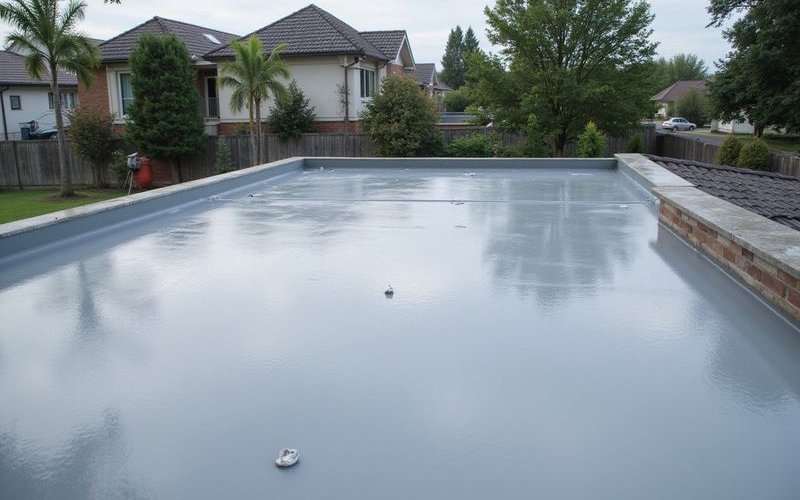
Proper application is 80% of the success equation. Even the best material will fail if the substrate is dirty or wet.
Step 1: Inspection and Angle Fillets
We start by identifying the leak source and checking the slope. A crucial pro-tip we use is installing “angle fillets.” These are 45-degree cement wedges created where the floor meets the wall. Sharp 90-degree corners are where membranes tear; the fillet smoothes this transition.
Step 2: Surface Preparation
This is where most contractors cut corners. The surface must be:
- Pressure Washed: Removing algae, moss, and loose paint.
- Repaired: Cracks larger than 2mm must be routed out and filled with sealant.
- Dry: Moisture meters help us ensure the concrete is dry enough for the primer.
Step 3: Primer Application
Think of primer as the glue. We apply a dedicated primer that penetrates the concrete pores. This ensures the main waterproofing layer adheres to the roof, not just the dust sitting on top of it.
Step 4: Membrane Application & Reinforcement
For liquid systems, we embed a fiber mesh layer between coats.
- Base Coat: Saturates the surface.
- Fiber Mesh: Adds tensile strength to prevent cracking.
- Top Coats: Two cross-layers (applied vertically then horizontally) ensure no pinholes remain.
Step 5: The Ponding Test
Once cured, we perform a “ponding test” whenever possible. We plug the drain and flood the area with water for 24 to 48 hours. If the ceiling below stays dry, the job is certified.
How Much Does Waterproofing Cost?
Pricing in 2026 has adjusted for labor and material costs. We believe in transparent pricing so you can budget effectively.
The following table outlines estimated costs for the Klang Valley region:
| System Type | Cost Per Sq Ft (Est.) | Best Application | Warranty Range |
|---|---|---|---|
| Liquid Membrane (Acrylic) | RM 2.50 - RM 4.50 | Low budget, steep slopes | 1 - 3 Years |
| Liquid Membrane (PU) | RM 4.50 - RM 7.00 | Concrete gutters, flat roofs | 3 - 5 Years |
| Torch-On Membrane | RM 6.00 - RM 10.00 | Large commercial, condos | 10 - 15 Years |
| Nano-Waterproofing (No-Hack) | RM 8.00 - RM 15.00 | Leaking bathrooms/balconies | 1 - 2 Years |
Why do prices vary?
- Access: A 3-storey shop lot requires scaffolding or cranes, increasing labor costs.
- Surface Condition: If we need to hack away old layers or re-screed the floor to fix ponding water, costs will rise.
- Debris Removal: Disposing of old tiles and concrete is a significant expense in urban areas.
DIY vs Professional Waterproofing
When DIY Might Work
You can tackle minor issues yourself if:
- The area is a small balcony or patio.
- You are using a user-friendly product like a “paint-on” acrylic coating.
- The surface is easily accessible without a high ladder.
- You have the patience to clean the surface continuously for a day.
When to Hire a Professional
We strongly advise calling an expert when:
- The roof is inaccessible: Sloped roofs and high ledges are dangerous without safety harnesses.
- Water is pooling: This requires re-leveling the concrete (screeding), which is skilled masonry work.
- Leaks are internal: If water is traveling through electrical conduits, the risk is severe.
- Warranty is required: DIY jobs have no guarantee.
Professional waterproofing ensures that the underlying issues, like drainage slope and structural cracks, are fixed alongside the coating.
Common Waterproofing Mistakes
We often get called to fix failed jobs. These are the most common errors to avoid:
- Ignoring the Slope: Waterproofing is not a tank. If water sits in a puddle for weeks (ponding), it will eventually break down the membrane. The roof must slope towards the drain.
- Using Acids to Clean: Some cleaners use heavy acids to remove algae. This eats into the concrete and weakens the surface.
- Applying on Damp Surfaces: Trapping moisture under a new layer causes blistering. As the sun heats the trapped water, it turns to vapor and bubbles up the new coating.
- Neglecting Vertical Turn-Ups: The waterproofing must go up the wall at least 6 inches (150mm). Stopping at the floor edge guarantees a leak at the seam.
- Wrong Material Choice: Using rigid cementitious waterproofing on a metal roof deck will result in immediate cracking due to thermal expansion.
Maintaining Your Waterproof Roof
A few minutes of care can extend your roof’s life by years.
- Clean Scupper Drains: The drain holes in concrete gutters clog easily with leaves. Check them monthly.
- Inspect Seals: Check the sealant around ventilation pipes and antennas annually.
- Watch for Plants: If you see a small plant growing in a crack, pull it out immediately. Roots can drill through concrete.
- Limit Access: Heavy boots can damage liquid membranes. Only go up when necessary.
Our Waterproofing Services
At Roofing Man, we combine technical expertise with local knowledge of Malaysian weather patterns. Our team provides:
- Comprehensive site inspections using moisture meters.
- Customized system recommendations based on your specific roof type.
- High-grade materials sourced from trusted manufacturers like Sika and Pentens.
- Strict adherence to the 5-step application process.
- Transparent warranties up to 2 years depending on the system.
Ready to waterproof your roof?
- Call: 016-699 9077
- WhatsApp: Chat with us
- Email: hello@roofingman.my
Get a free assessment and honest quote for your waterproofing project.