5 Common Causes of Roof Leaks in Malaysian Homes
Discover the most common reasons Malaysian homes develop roof leaks and how to prevent them. Expert insights from professional roofers.
The Klang Valley weather is famous for its unpredictability. You know how it goes: one minute it’s a scorching 34°C afternoon in Petaling Jaya, and the next, a massive thunderstorm is pounding your roof. This constant cycle of extreme heat followed by rapid cooling puts incredible stress on your home’s primary defense.
We established Roofing Man in 2013 to help Malaysian homeowners navigate exactly these kinds of tropical challenges. From what we have seen over the last decade, most leaks aren’t just random accidents—they are predictable failures caused by specific local conditions that require professional roof leak repair.
Let’s look at the data, the “silent” signs you might be missing, and the practical steps you can take to keep your home dry.
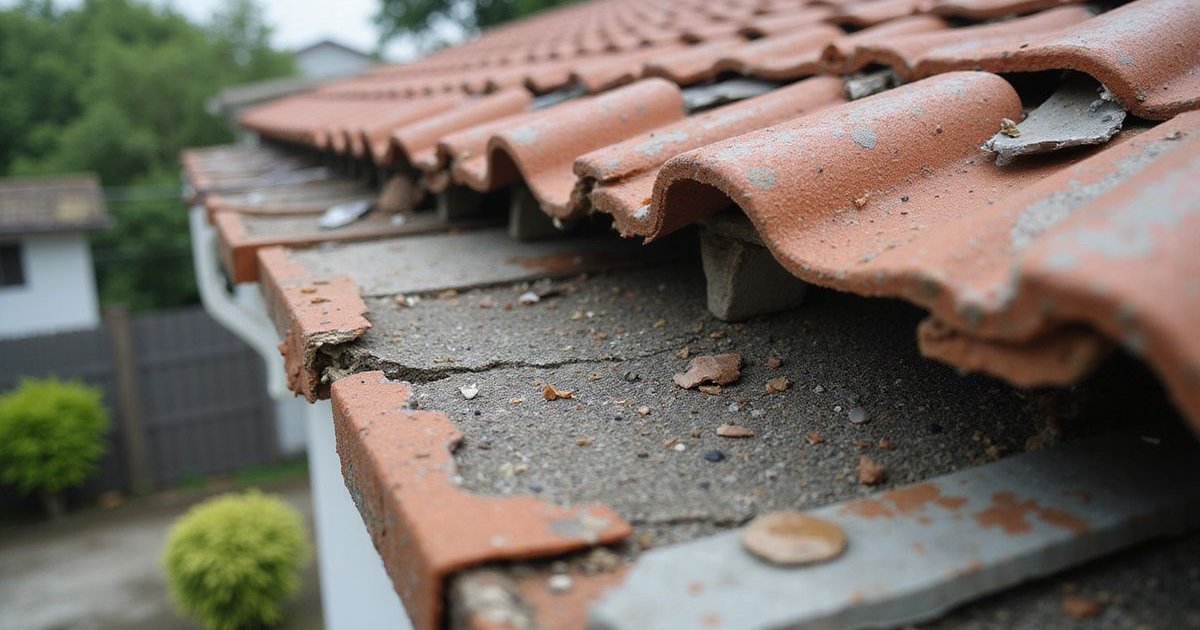
1. Damaged or Missing Roof Tiles
The most frequent culprit we see in Malaysian residential areas is physical damage to the tiles themselves. While concrete and clay tiles are durable, they are not invincible against our climate.
Why tiles fail here:
- Thermal Shock: Your roof surface can reach temperatures above 60°C on a sunny day. When a sudden monsoon rain hits, the rapid cooling causes tiles to contract sharply, leading to hairline cracks.
- Debris Impact: Heavy branches from roadside Angsana or Rain Trees often snap during storms, cracking tiles on impact.
- The “Invisible” Crack: We often find hairline fractures that are impossible to see from the ground but widen significantly during heavy rain.
Signs to watch for:
- Fragments of clay or concrete in your drain pipes
- Sunlight peeking through the attic space during the day
- Tiles that look slightly “slipped” or crooked compared to the rest
Prevention & Action:
- Schedule a visual check: Use binoculars to scan your roof annually without climbing up.
- Trim overhanging branches: Keep trees at least 2 meters away from your roofline.
- Check the brand: If you have older tiles, identify if they are standard profiles like Monier Elabana or Lama, as finding matching replacements can sometimes be tricky for discontinued lines.
2. Failed Flashing
Flashing is the unsung hero of your roof. It is the metal strip (usually aluminium or zinc) used to seal edges, corners, and ridges. In terrace houses, this is critical at the “party wall”—the dividing wall between you and your neighbor.
Why flashing fails:
- The “Party Wall” Gap: In many terrace homes, the sealant connecting your roof flashing to the neighbor’s wall cracks due to structural settling.
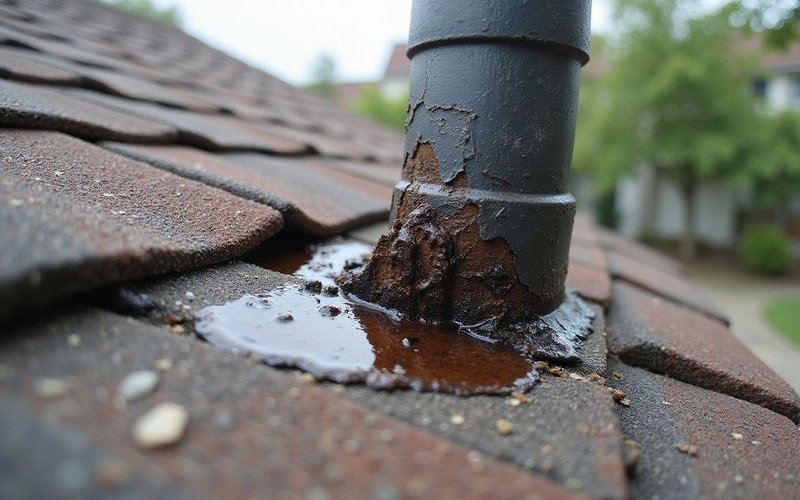
- Rust and Corrosion: Cheaper zinc flashing can rust through in as little as 5-10 years in our humid climate.
- Sealant Breakdown: UV rays degrade the silicon or bituminous sealant used at the edges, causing it to peel away.
Common failure points:
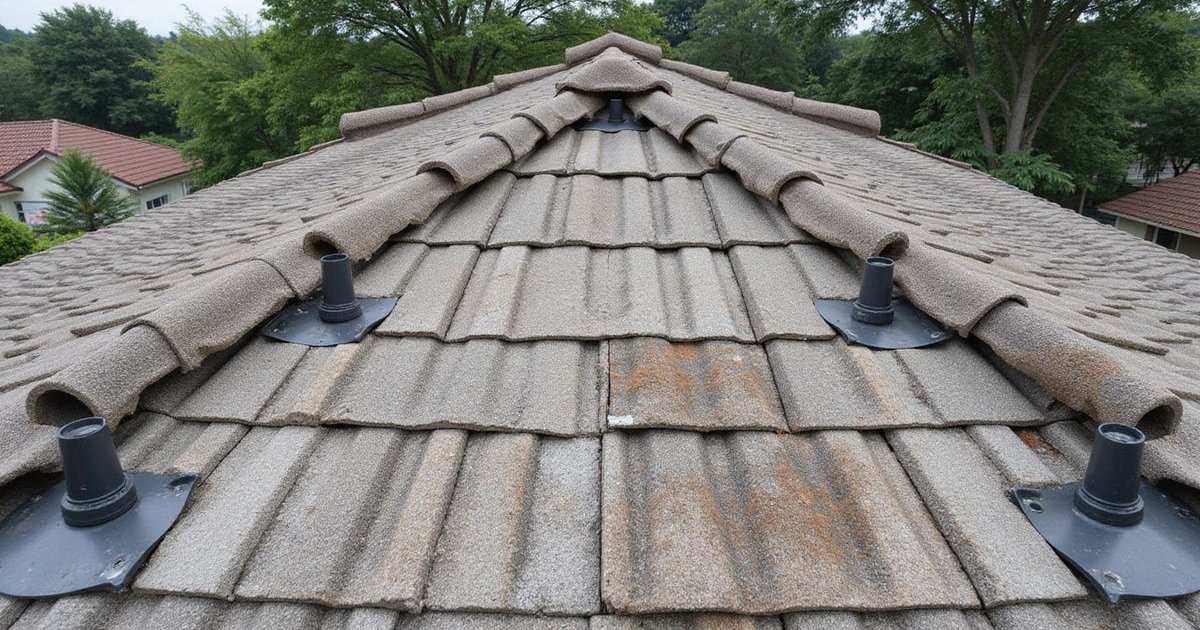
- Around roof ventilation pipes
- At the junction where a lower roof meets a vertical wall
- Around skylights or solar panel mountings
Prevention:
- Upgrade materials: We recommend using heavy-duty aluminium flashing which resists corrosion far better than standard zinc.
- Inspect the sealant: Look for cracked or peeling black/grey sealant lines along the metal edges.
3. Clogged Valley Gutters
Valley gutters are the “V” shaped channels where two roof slopes meet. In our tropical climate, these are high-risk zones because they handle massive volumes of water.
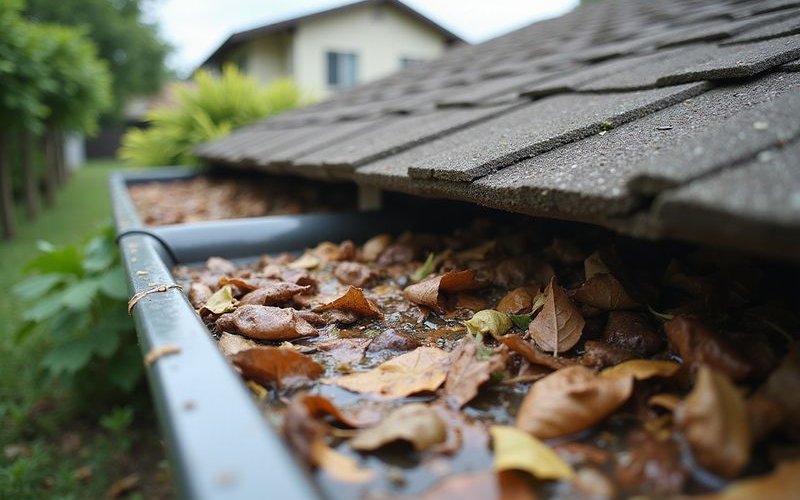
The “Hidden” Danger: Unlike external gutters, valley gutters sit on top of your ceiling. If they overflow, water doesn’t fall outside—it pours directly into your roof space and onto your plaster ceiling.
What causes the backup:
- Organic damming: Wet leaves stick together to form a solid “dam” that forces water upward under the tiles.
- The “Tennis Ball” Factor: It sounds funny, but we find tennis balls and badminton shuttlecocks blocking downpipes more often than you would expect.
- Undersized trays: Some older developments used narrow metal trays that cannot handle the volume of a modern “100-year storm” event.
Prevention:
- Cleaning schedule: Clear these channels before the Northeast Monsoon (October) and again in April.
- Install leaf guards: A simple mesh guard over the downpipe outlet can prevent a total blockage.
4. Aging Waterproofing Membrane
This is particularly relevant for homes with flat concrete roofs, such as car porches, balconies, or modern “box” design houses.
The “Screed” Problem: Many Malaysian contractors apply a layer of cement screed over the waterproofing membrane.
- The issue: When the waterproofing fails, water travels sideways under the cement screed.
- The result: The leak inside your house might be 10 feet away from the actual crack in the membrane.
Typical lifespans in Malaysia:
| Material Type | Estimated Lifespan | Best Use Case |
|---|---|---|
| Bitumen Torch-on | 10-15 Years | Flat concrete roofs (hidden) |
| PU Liquid Membrane | 5-10 Years | Balconies / Exposed decks |
| Cementitious | 10-15 Years | Bathrooms / Wet areas |
Solutions:
- Don’t just patch: Spot repairs on old membranes rarely last.
- Consider reroofing: For flat roofs older than 15 years, a full replacement of the membrane is often more cost-effective than chasing leaks every few months.
5. Poor Original Installation
We often see leaks in kitchen extensions or renovations where the original design rules were ignored.
The “Low Pitch” Mistake: Standard roof tiles like the Monier Elabana require a minimum pitch (slope) of at least 17.5 degrees to drain properly.
- The problem: Many kitchen extensions are built with a very flat slope (often 10-12 degrees) to save space.
- The consequence: During heavy rain and wind, water gets blown backwards up the roof and under the tiles.
How to identify installation issues:
- Leaks occur only during heavy storms with strong winds.
- Water stains appear near the top of the extension where it meets the main house.
- You have repaired the same spot three times, but it still leaks.
Solution:
- Check the lap: For lower slopes, tiles need to overlap more (increase the “headlap”) to prevent backflow.
- Install a secondary layer: A high-quality underlayment foil is essential for low-pitch roofs to catch any water that bypasses the tiles.
The Malaysian Climate Factor
Understanding our local weather patterns helps you predict when problems will arise.
Monsoon Season (October - March)
This is the wettest period for the West Coast.
- Rainfall Intensity: Petaling Jaya averages over 300mm of rain in November alone.
- The Test: This sustained volume tests your drainage capacity. If your gutters are even partially blocked, they will fail now.
Dry Season (April - September)
While drier, this season does its own damage.
- UV Damage: The UV index in KL often hits “Extreme” levels (11+). This cooks sealants and makes waterproofing membranes brittle.
- Thermal Expansion: The daily expansion and contraction cycle loosens the mortar bedding on ridge caps.
Preventing Roof Leaks
Based on our experience fixing thousands of roofs in the Klang Valley, here is your maintenance checklist:
- Annual visual inspections: Scan your roof once a year, preferably in September before the monsoon starts.
- Clean valley gutters: Regular gutter services is the single most effective way to prevent major ceiling damage.
- Check party walls: If you live in a terrace house, inspect the joint between your roof and your neighbor’s.
- Monitor your ceiling: A small yellow stain is an early warning. Don’t wait for it to turn into a drip.
- Use quality materials: Ask contractors for specific brands (like Sika for sealants or reputable membrane manufacturers) rather than generic “waterproofing.”
When to Call a Professional
You should contact a roofing expert if you notice:
- Water stains that grow larger after every rain.
- Damp or musty smells in your upper rooms.
- Visible daylight showing through your roof boards.
- Your roof is over 20 years old and has never been inspected.
At Roofing Man, we provide free roof inspections and can identify problems before they cause major damage.
Ready for a roof inspection?
- Call: 016-699 9077
- WhatsApp: Chat with us
- Email: hello@roofingman.my
Serving Petaling Jaya, Subang Jaya, Shah Alam, Puchong and the entire Klang Valley.